CATCH
Cute Anthropomorphic Torso-Tracked Convertible Humanoid
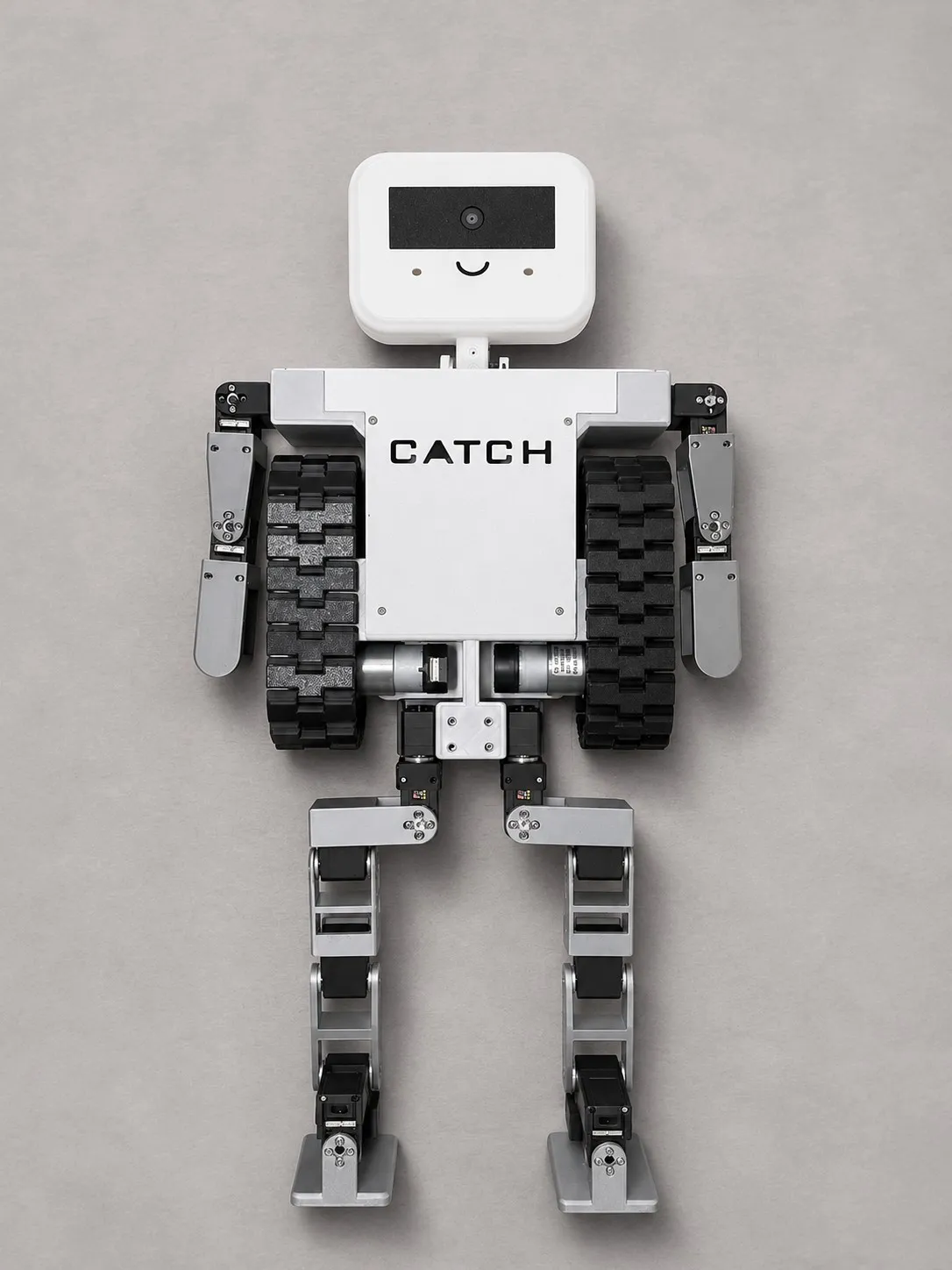
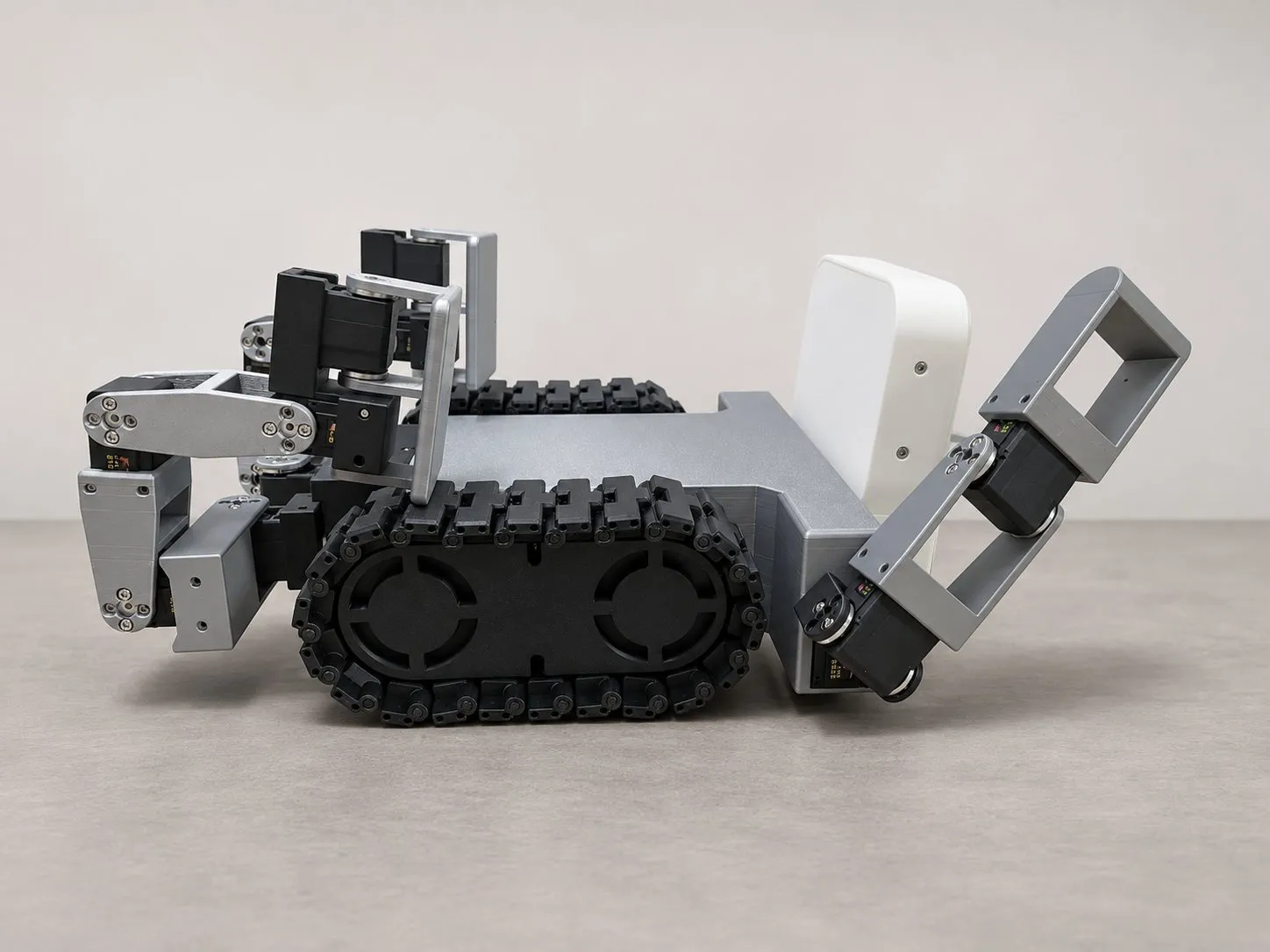
A small humanoid designed to feel like a playful little friend. Its single body changes shape with the task: folded low on its tracks to get around, or upright to reach out, interact, and express itself. I designed, 3D printed, and assembled it, and it is the first testbed for a design-to-learning pipeline I'm working on.
Built · Not yet powered on
Watch the progress videoWhy CATCH
I want robots that are not only useful but also endearing, companions people want to live with. CATCH is designed to feel like a playful little friend: when you call its name, it should turn toward you, wave its arms, and drive over to you on its tracks. That is the goal, not a demo yet; CATCH has not been powered on, but its body is built for it.
The body came from an engineering question. Tracked robots often use rotating flippers to get over obstacles, and I wondered whether humanoid arms and legs could do the same job while also allowing more varied movement and playful expression. So CATCH drives on side-mounted tracks for everyday mobility, and its limbs help it over obstacles, express its personality through gestures, and eventually handle objects.
Software can add new behaviors over time, but it cannot overcome every physical limitation. I wanted CATCH's body to support not just what it can do today, but what it could become.
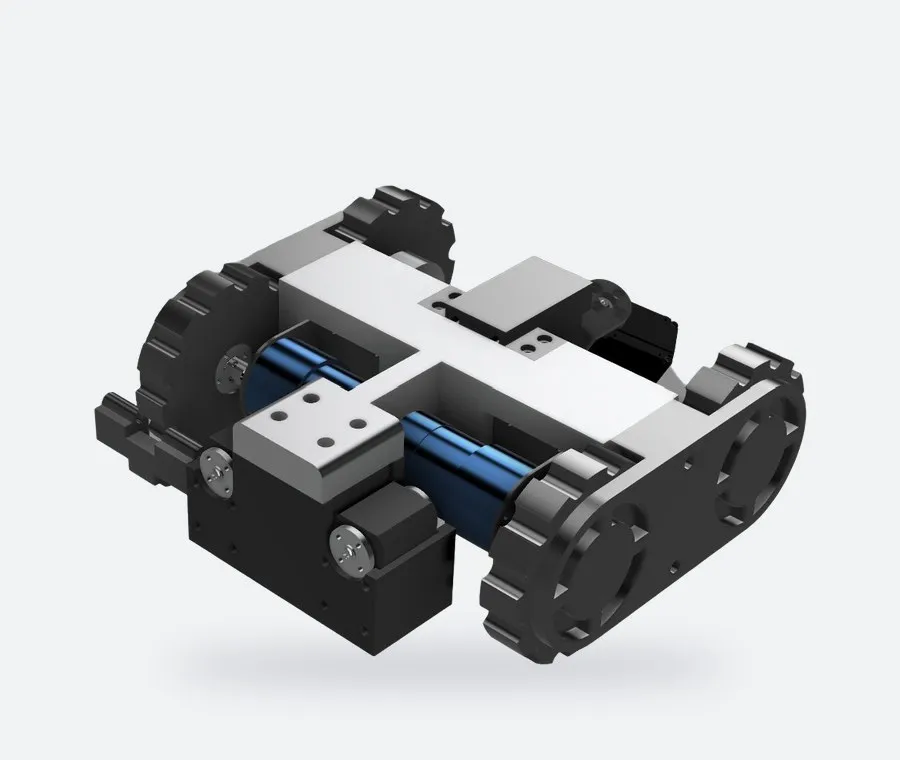 1 Tracks
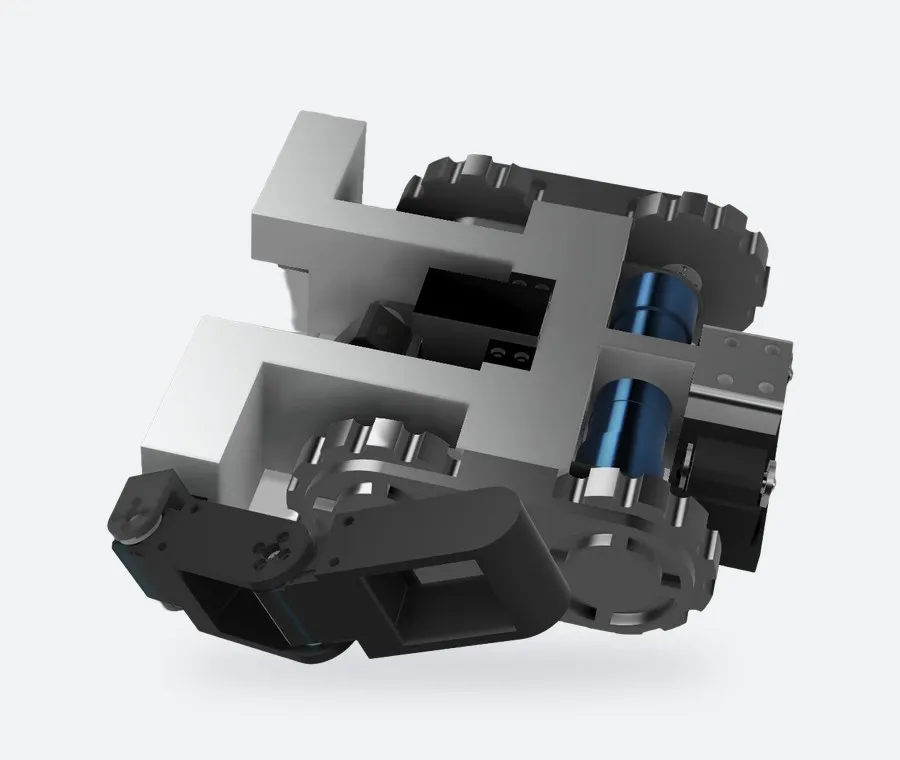 2 + Arms
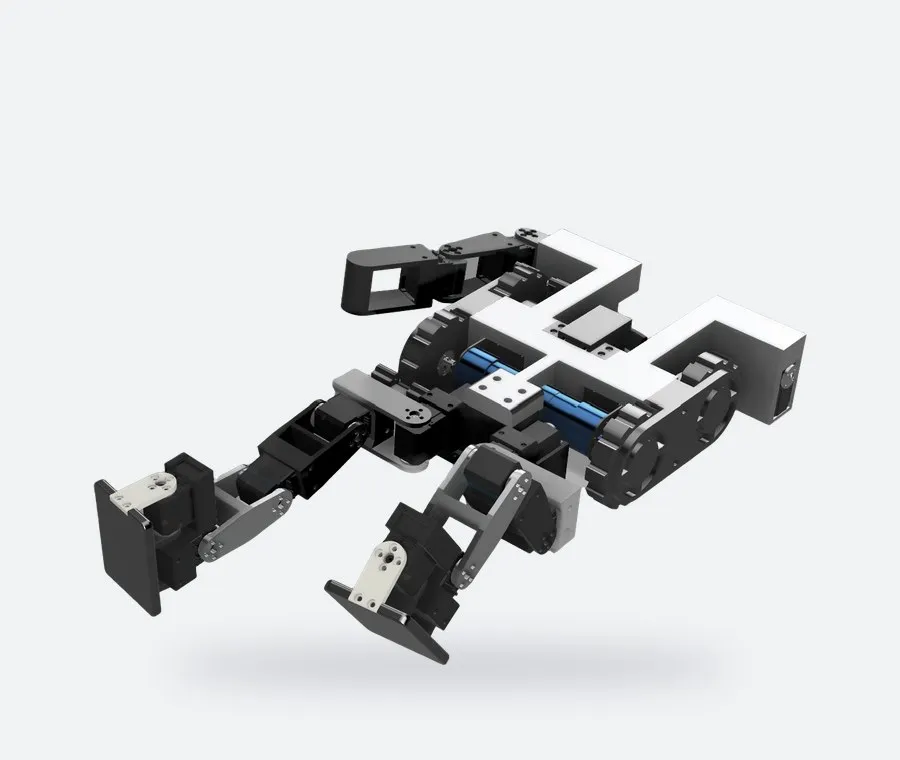 3 + Legs
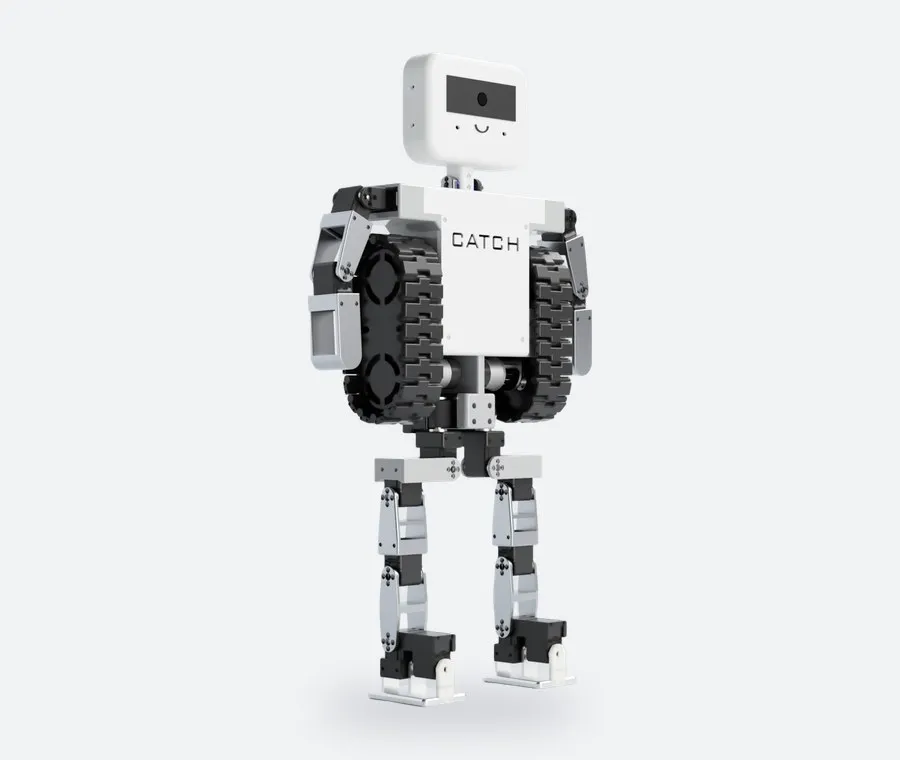 4 CATCH
Design and build
Every part was designed in Fusion and 3D printed, and I assembled the robot by hand. Each leg has six degrees of freedom, each arm three, and the neck two, for 20 servo-driven joints, plus a motor-driven track on each side of the torso. The ankles use a parallel linkage adapted from ToddlerBot.
Later in the design, I worked with a coding agent through a set of Fusion tools I wrote. They let the agent build and check parametric parts, apply 3D-printing tolerances, verify that printed parts can actually be assembled, export print-ready files, and render exploded views like the one shown here.
Electronics and wiring
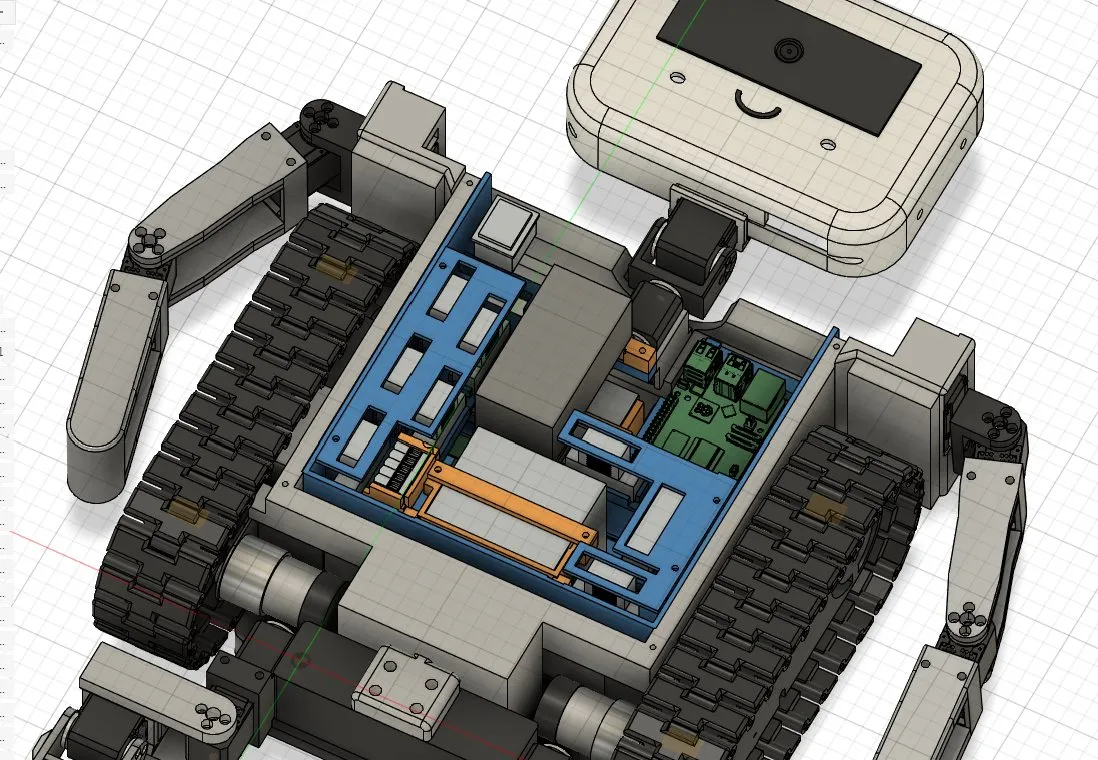
Then I moved on to the electronics. Every board, battery, and servo driver has a place inside the torso in CAD, added step by step so the physical build can follow the same order. To plan the wiring, I built an interactive wiring map that shows all 191 planned connections with their pin assignments and parts information, so the robot can be wired exactly as designed. All the components for the current prototype are in hand, and wiring is next.
From design to learning
CATCH is also the first testbed for a larger project: a design-to-learning pipeline that carries a robot from CAD through simulation and training back to hardware, with as little manual rework as possible. I've been building it so far, and I'm now teaming up with a collaborator who specializes in AI agents to take it further.
Right now, trying a new body design takes a lot of manual work: the simulation model has to be rebuilt and the training set up again, so only a handful of designs ever get tested.
A repeatable loop changes that. Changing part of CATCH's body, such as its leg length, becomes a quick edit: update the design, retrain in simulation, and measure how the change affects what it learns. That makes the loop a framework for hardware co-design, one that can explore many bodies and turn up designs I would not have found on my own, including a better body for CATCH itself. This is the research I want to pursue: designing a robot's body and its controller together. The same loop also shortens the path from idea to trained prototype for every new robot I want to build, and because the tools are built to be reused, it could make it easier for more people to build robots of their own.
- DesignAgent-assisted tools for mechanical CAD, electrical design, and parts lists, used throughout CATCH.In use
- BuildPrinted and assembled; electronics fully planned, not yet wired.Done
- SimulateFusion CAD → URDF → Isaac Sim. One arm and a 30-link track run with working track–ground contact.Pilot
- TrainReinforcement learning in Isaac Lab for driving, standing up, and switching between the two.Next
- DeployRun the trained controllers on CATCH and compare them with simulation.Next
- Co-designVary the body, retrain, and find the version that learns best.Goal
Status and next steps
The mechanical prototype is assembled and the electronics are fully planned, but nothing is wired yet, so CATCH has not been powered on. Next, I'll wire it and power it on, develop and test its movement in simulation and on the robot, and then add voice so it can respond to its name and come over when called.